A supplier who delivers 0.06% Fe2O3 on one batch and 0.20% on the next is worse than a supplier who delivers 0.12% consistently — even though the first supplier has a better single-batch result.
Technical Details
Consistency matters more than peak performance because your ceramic production is optimized for a specific raw material chemistry. When that chemistry changes between batches, everything changes: fired color shifts (customer complaints), water absorption fluctuates (out-of-spec tiles), shrinkage varies (dimensional problems), and glaze fit shifts (crazing on some production runs). Each of these quality issues costs money in rejects, rework, customer returns, and reputation damage. How to evaluate consistency: request COA data from at least 10 consecutive production batches. Calculate the mean and standard deviation for Fe2O3, total alkali, and particle size residue. A good supplier will have: Fe2O3 standard deviation below 0.02%, total alkali SD below 0.3%, and particle size residue SD below 0.5%.
Practical Application
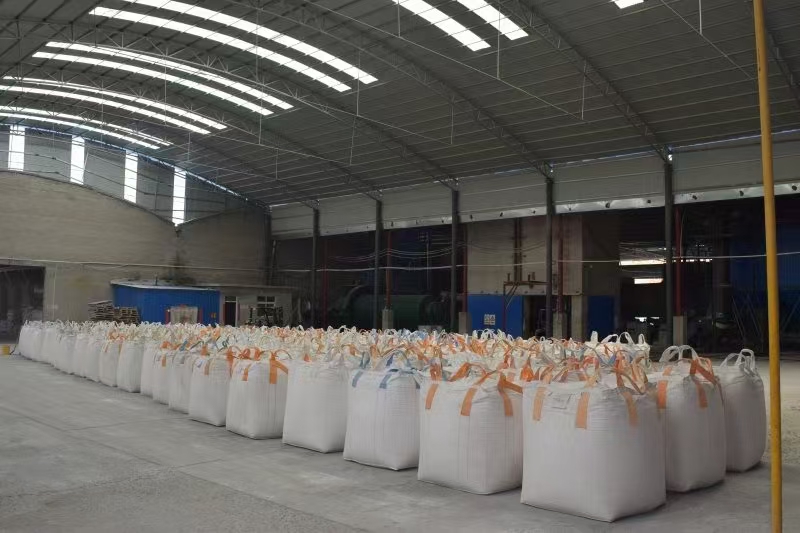
Our wet-process production achieves these consistency targets because: single ore source (120M+ tons of geologically uniform deposit), multi-stage processing that normalizes minor ore variations, hydrocyclone classification for precise particle size control, and comprehensive testing of every production batch. We provide 10-batch consistency data to prospective customers on request..
Our Products & Recommendation
.
Questions about raw material science?
Our technical team provides formulation support and samples for testing.