When evaluating nepheline syenite or feldspar suppliers, the processing method — wet versus dry — is arguably more important than the raw ore quality itself. Two suppliers mining from geologically similar deposits can produce dramatically different final products depending on how they process the ore. As a procurement professional, understanding this distinction will help you interpret COA data, evaluate supplier claims, and make better sourcing decisions.
How Dry Processing Works
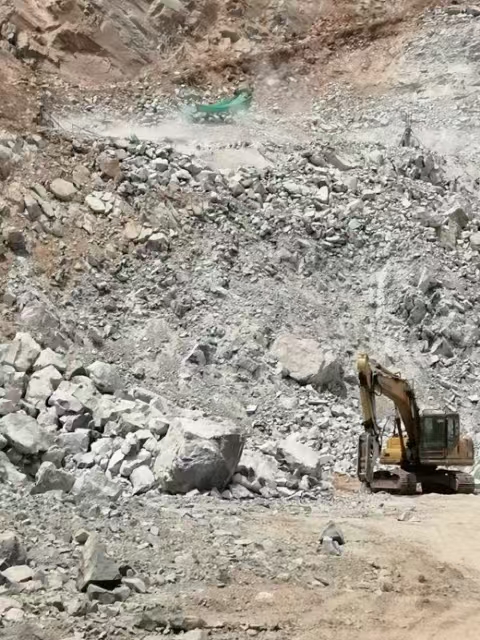
Dry processing is the simpler, cheaper, and faster approach. Raw ore is crushed in jaw and cone crushers, then ground in air-swept mills (Raymond mills, vertical roller mills, or similar) to the target particle size. Air classifiers separate the ground material by particle size — coarse particles return to the mill, fine particles proceed as finished product. Some dry operations include dry magnetic separation using permanent magnet drums or belt separators to remove iron-bearing minerals. The entire process takes place without water, which simplifies the operation and eliminates the need for dewatering and drying steps.
The advantages are clear: lower capital investment, lower operating costs, simpler logistics, no water management requirements, and faster throughput. Many mineral processors choose dry processing for exactly these reasons, and for applications where ultra-low iron is not critical (glass batch, colored ceramics, construction materials), dry processing delivers perfectly acceptable quality at the lowest cost.
How Wet Processing Works
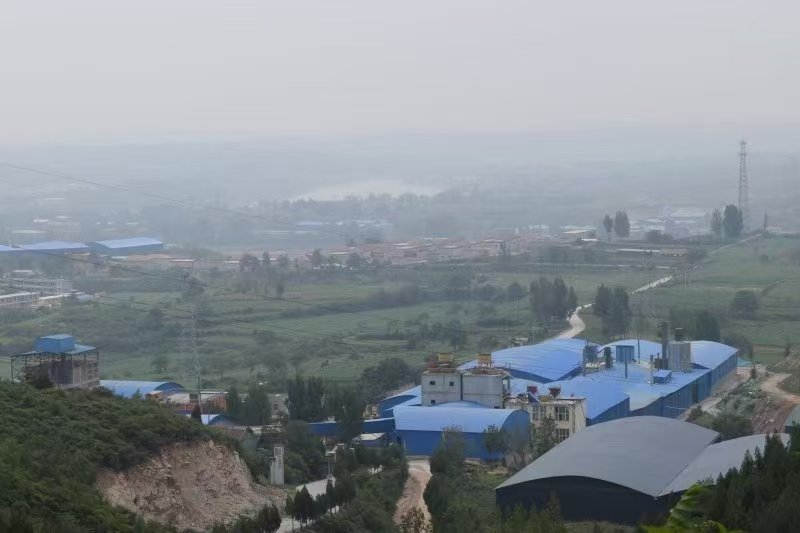
Wet processing is more complex and capital-intensive, but produces measurably superior quality for ceramic applications. After initial crushing, the ore is mixed with water to create a slurry (typically 30-40% solids by weight). This slurry enters wet ball mills where ceramic or high-chrome steel grinding media reduce the ore to the target particle size while suspended in water. The grinding action in water serves a dual purpose: it reduces particle size AND it liberates individual mineral grains from each other, including the tiny iron-bearing minerals (magnetite, biotite, hornblende, ilmenite) that were physically locked inside larger nepheline or feldspar crystals in the original ore.
After wet grinding, the slurry passes through multiple stages of high-intensity wet magnetic separation (HIWMS). In the first stage, low to medium magnetic field strength captures strongly magnetic particles (primarily magnetite). Subsequent stages use progressively higher field strength to capture moderately and weakly magnetic particles that the first stage missed. This multi-stage approach is the key to achieving ultra-low Fe2O3 levels — each additional stage removes a fraction more of the remaining iron minerals, progressively purifying the product.
After magnetic separation, the purified slurry passes through hydrocyclone classifiers for precise particle size control, then through thickeners to recover water for recycling, filter presses to dewater the concentrated slurry, and finally rotary or flash dryers to produce the dry finished powder ready for packaging.
The Critical Quality Difference: Iron Removal
The fundamental quality advantage of wet processing comes down to one mechanism: particle liberation. In the original ore, iron-bearing minerals exist in two forms — as free particles between larger mineral grains, and as inclusions trapped inside larger nepheline or feldspar crystals. Dry processing can capture the free particles using magnetic separation, but the trapped inclusions remain locked inside their host grains and pass through the magnetic field undetected. They end up in your final product as invisible iron contamination that only reveals itself when the ceramic is fired.
Wet grinding to fine particle size breaks open these host grains, liberating the iron mineral inclusions and exposing them as free particles that the magnetic separator can capture. This liberation step is only possible in wet processing — the water acts as both a grinding medium and a transport fluid that keeps liberated particles in suspension for magnetic capture.
Measurable result: From the same ore body, wet processing typically achieves Fe2O3 levels 2 to 5 times lower than dry processing. Our K200 grade achieves 0.08% Fe2O3 through wet processing. A dry-processed product from comparable ore would typically show 0.20-0.40% Fe2O3. This is not a marginal difference — it is clearly visible in the fired ceramic. A side-by-side firing test of wet-processed versus dry-processed material from the same deposit will show obvious yellowing in the dry-processed sample.
Additional Wet Process Advantages for Buyers
No steel contamination: Dry grinding typically uses steel grinding media and steel mill liners that wear during operation, introducing metallic iron contamination into the product. This contamination appears as dark specks in the fired ceramic — a defect that no amount of magnetic separation after grinding can fully remove, because the contamination is introduced during the grinding itself. Wet processing can use ceramic grinding media, eliminating this contamination source entirely.
Better particle size control: Hydrocyclone classifiers in wet processing provide more precise particle size distribution control than air classifiers used in dry processing. The result is a narrower, more consistent PSD that translates to more predictable ceramic behavior in your production line.
Dust-free operation: Wet processing produces no airborne mineral dust, which is better for worker health and eliminates the need for complex dust collection systems.
What This Means for Your Procurement Decision
When you receive quotations from multiple nepheline syenite or feldspar suppliers, the processing method should be your first screening criterion. If your application requires Fe2O3 below 0.15% (which covers all white-bodied ceramic tiles, porcelain, sanitary ware, and tableware), you should strongly prefer wet-processed suppliers. If a dry-process supplier claims Fe2O3 below 0.15%, request independent lab verification from multiple consecutive batches — the claim may reflect occasional best-case results rather than consistent production capability.
At Ceramic Minerals, we have invested over 40 million CNY in our wet-process production lines because we recognized from the beginning that quality is the foundation of lasting customer relationships. Our customers in India, Turkey, Southeast Asia, and beyond consistently confirm that our delivered quality matches our COA specifications — because wet processing delivers that consistency, batch after batch, year after year.
Verify for yourself: request samples and test in your own lab. Contact: andy@ceramicminerals.com · WhatsApp 0086-132 6813 3001