| Property | Nepheline Syenite | Talc |
|---|---|---|
| Our product | K200 / K100 / GP20 | — |
| Primary oxides | Na2O+K2O 12-16%, Al2O3 20-24% | MgO 30-32%, SiO2 60-63% |
| Flux mechanism | Alkali flux | MgO flux (moderate) |
| Flux power | Very high | Moderate |
| Al2O3 | 20-24% | 0-1% |
| LOI | ~1% | ~5-6% |
| CTE effect | Increases expansion | Decreases expansion |
| Best for | Porcelain, full vitrification | Wall tiles, stoneware, expansion control |
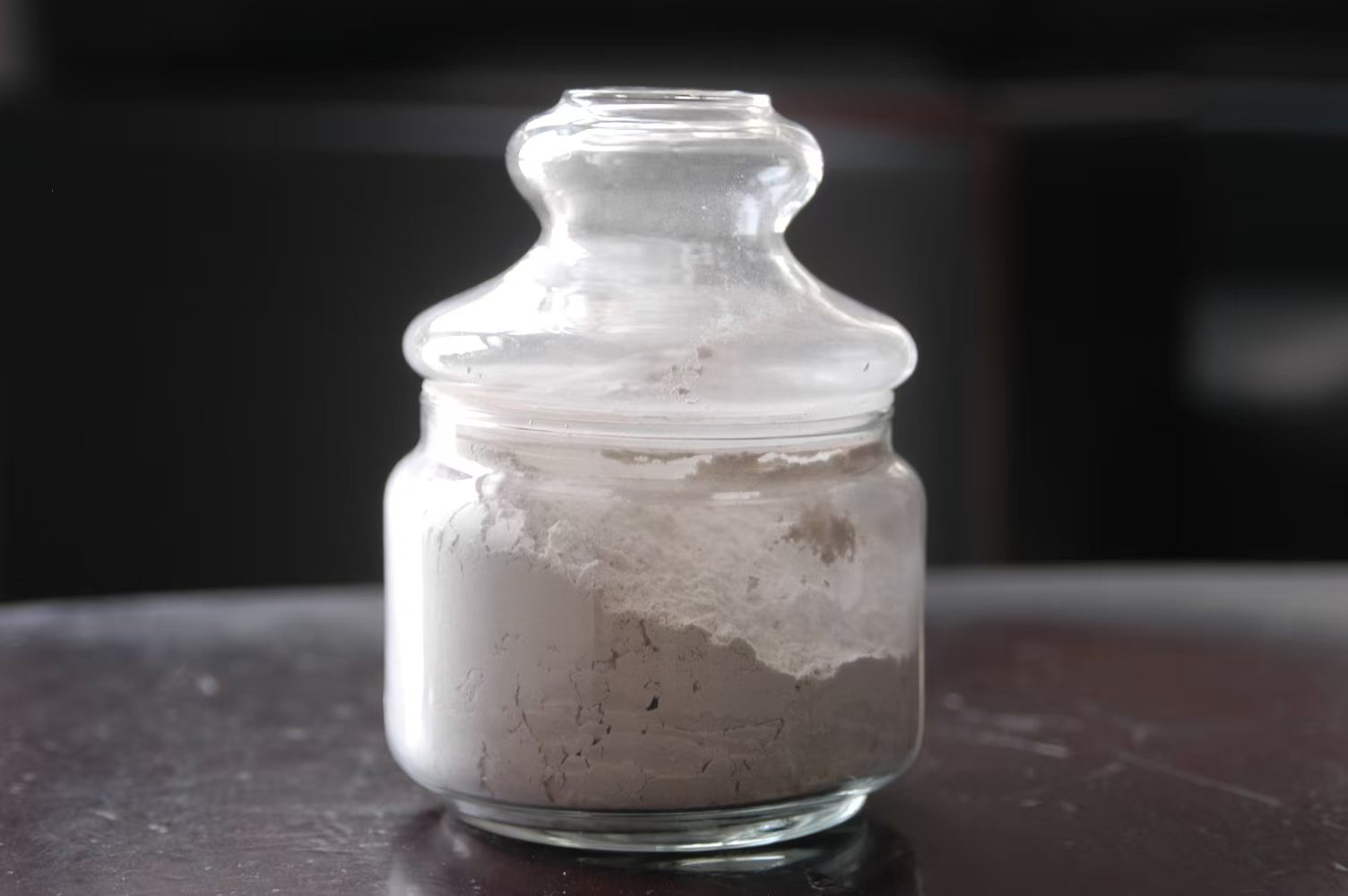
Talc (hydrous magnesium silicate) is widely used in ceramic bodies as a secondary flux and thermal expansion modifier. While both nepheline and talc contribute to ceramic body maturation, they serve fundamentally different roles. Understanding the difference helps you formulate more effectively — and potentially reduce costs by using each material where it adds the most value.
Different Roles in the Body
Nepheline is the primary flux — it drives the main glass-forming reaction that determines your vitrification temperature and fired density. Talc is a modifier — it adjusts thermal expansion, contributes MgO for specific glass phase properties, and provides moderate additional fluxing. In most formulations, nepheline cannot be replaced by talc (you would need dramatically more talc to achieve the same vitrification, and the resulting body would have completely different expansion and strength characteristics). However, talc often cannot be eliminated either, because its MgO contribution and expansion-lowering effect serve specific technical functions.
Typical Combined Use
Most industrial ceramic bodies use nepheline (or feldspar) as the primary flux at 15-30% and talc as a secondary addition at 2-5%. The nepheline provides the vitrification driving force; the talc fine-tunes the thermal expansion to improve glaze fit and contributes MgO to the glass phase for better chemical durability. For wall tiles: nepheline at 10-15% + talc at 3-5%. For floor tiles: nepheline at 18-25% + talc at 2-4%. For porcelain: nepheline at 25-30% + talc at 1-3% (minimal talc to avoid lowering expansion too much).
Cost Analysis
Talc is generally cheaper per ton than nepheline, tempting some manufacturers to maximize talc and minimize nepheline. However, talc provides much less flux per ton — you need approximately 3x more talc to achieve the same fluxing effect as nepheline, and the resulting body properties (very low expansion, excessive MgO) are unsuitable for most products. The cost-effective approach: use nepheline at the minimum level needed for your vitrification target, and talc at the minimum level needed for expansion control. Our K100 offers the best cost-per-unit-of-flux for standard production.
See the difference yourself
Request samples for your own side-by-side comparison in your lab.