Selecting the right feldspar or nepheline syenite supplier is one of the most consequential procurement decisions a ceramic manufacturer can make. A poor choice leads to inconsistent product quality, unexpected price volatility, supply disruptions, and production problems that far outweigh any savings from a lower initial quotation. This guide presents seven evaluation criteria that experienced procurement professionals use, with specific questions to ask potential suppliers and red flags to watch for.
1. Vertical Integration: Does the Supplier Own Their Mine?
This is the most important structural question. Suppliers who own their own mine and processing plant (vertically integrated, like Ceramic Minerals) control raw material quality from the geological source. They can guarantee long-term consistency because they manage mining face selection, ore blending, and processing parameters directly. They have no incentive to switch raw material sources based on short-term pricing.
Traders and non-integrated processors purchase raw ore from third-party mines and may switch sources whenever prices change or their usual source has supply problems. Each source has different geological characteristics, which means the processed product chemistry can shift without warning. A buyer who has optimized their formulation for one mineral chemistry may experience production problems when the supplier quietly switches to a different ore source.
Ask: Do you own your mine? What is the reserve size? How many years of supply at current production rate?
2. Processing Technology: Wet or Dry?
As detailed in our wet vs dry process guide, the processing method determines the quality ceiling. Wet processing with multi-stage magnetic separation achieves Fe2O3 levels 2-5 times lower than dry processing from the same ore. If your application requires Fe2O3 below 0.15%, you should strongly prefer wet-process suppliers.
Ask: Is your processing wet or dry? How many stages of magnetic separation? What is your typical Fe2O3 range? Can you provide data from 10 consecutive batches?
3. Quality Consistency and Documentation
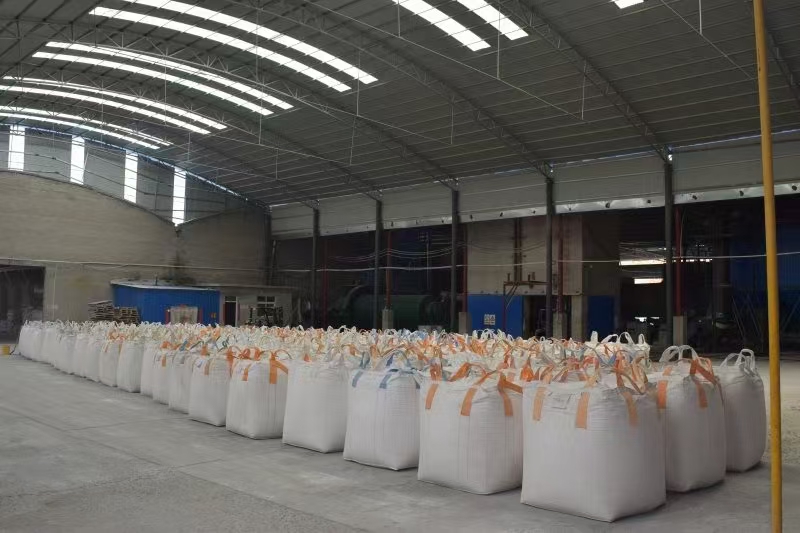
A single COA showing excellent numbers proves nothing — it may represent the best result from dozens of batches. What matters is consistency across production batches over time. Request COA data from at least 5-10 consecutive batches and calculate the mean and standard deviation for Fe2O3, total alkali, and particle size. Low mean AND low standard deviation indicates genuine production control.
Also check whether COA data comes from in-house testing only or includes independent third-party laboratory verification. Self-testing has inherent bias (conscious or unconscious). Third-party verification demonstrates confidence and transparency. At Ceramic Minerals, export shipments include testing from Foshan Youbo Ceramic Analysis and Testing Co. — an independent lab recognized throughout the ceramic industry.
Ask: Can I see COA data from your last 10 production batches? Do you use third-party lab verification? Which lab?
4. Reserve Size and Supply Longevity
Mineral deposits are finite. A supplier with small reserves (under 10 million tons) faces potential depletion within a decade at industrial production rates. As a deposit approaches depletion, ore quality may change (mining reaches different geological zones), production costs may increase (deeper mining, more waste stripping), and the supplier may need to source from alternative deposits — disrupting the consistency you have built your production around.
Our 120 million+ ton reserve at Jiulongshan represents over 400 years of supply at our current 250,000 tons/year production rate. For our customers, this means zero risk of source depletion during their business lifetime. Consistent geology = consistent product = consistent production.
Ask: What is your verified reserve tonnage? At current production rate, how many years of supply?
5. Production Capacity and Lead Time
Can the supplier reliably meet your current volume requirements with room for growth? A supplier operating at 90%+ of capacity will struggle to accommodate order increases or urgent requests. Ask about monthly production capacity, current capacity utilization, and standard lead times from order to container loading.
At 250,000 tons annual capacity, Ceramic Minerals operates well within our capacity limits, maintaining inventory of standard grades for rapid delivery. Typical lead time from order confirmation to container loading: 5-14 days.
Ask: What is your monthly capacity? What percentage is currently utilized? What is your standard lead time?
6. Export Experience and Logistics Capability
For international buyers, a supplier's export capability matters as much as their product quality. Can they handle export documentation (commercial invoice, packing list, bill of lading, COA, certificate of origin)? Do they offer both FOB (you arrange shipping) and CIF (they arrange shipping) terms? Are they located near major container ports for cost-effective logistics?
Our factory is strategically located with fast access to three major Chinese ports: Tianjin (500km), Qingdao (600km), and Lianyungang (550km). Container trucks reach these ports within 6-8 hours. We offer FOB and CIF terms and handle all export documentation professionally.
7. Technical Support and Partnership Mindset
The best suppliers are not just material sellers — they are technical partners who help you optimize your production. Do they provide samples for laboratory evaluation? Can they offer formulation guidance based on your specific kiln and product requirements? Will they help troubleshoot if quality issues arise with their material?
A supplier who provides extensive pre-sale support (samples, data, technical consultation) is investing in a long-term relationship. A supplier who only quotes a price is looking for a transaction.
Experience our approach: andy@ceramicminerals.com · WhatsApp 0086-132 6813 3001